
Applied digital architecture across high-trust business environments.
Digital Architecture Case Studies
Pishi Studio develops structured digital systems for organizations operating in competitive markets. These case studies show how fragmented brand, website, and conversion systems can be transformed into coherent digital presence with stronger authority, clarity, and strategic direction.
Note: Client details are intentionally generalized to respect confidentiality.
How We Present Our Work
These case studies reflect Pishi Studio’s approach to strategic digital architecture. Rather than treating digital presence as isolated design or marketing output, we examine how brand structure, website architecture, trust formation, and inquiry systems operate together. Because many engagements involve sensitive commercial context, selected projects are presented in anonymized form. Each example focuses on the structural problem, the architectural intervention, and the resulting business effect.
Selected Engagements
A selection of digital presence and brand strategy case studies from high-trust service and infrastructure environments.
01
B2B Professional Services Firm
Fragmentation: Brand positioning, website structure, and intake processes had evolved separately, creating friction across trust, user clarity, and client onboarding.
Architecture: Pishi Studio restructured the messaging hierarchy, clarified the service architecture, and streamlined the inquiry path into a more coherent and strategically aligned digital system.
Outcome: A stronger authority presence, improved user clarity, and a more efficient intake experience across the client journey.
02
Strategic Consulting Practice
Fragmentation: Service lines lacked structural clarity, and the digital inquiry path relied too heavily on referrals rather than a guided and self-explanatory digital presence.
Architecture: Pishi Studio redesigned the information hierarchy, refined the conversion path, and translated the offer into a clearer and more navigable digital framework.
Outcome: A more legible client journey and a stronger environment for executive-level inquiries, trust-building, and qualified engagement.
03
Tech & Infrastructure Provider
Fragmentation: A technically sophisticated offer was presented through a confusing website architecture that made decision-making more difficult and orientation less intuitive for buyers.
Architecture: Pishi Studio simplified the information architecture, improved content pathways, and clarified how stakeholders move through the digital system with greater confidence.
Outcome: A more usable digital presence and better alignment between technical depth, user understanding, and decision-making clarity.

Featured Case Study
Building Pishi Studio as a Live Architectural System
The Challenge:
The objective was not simply to launch a website, but to build a strategic digital architecture practice with a digital presence capable of expressing calm authority, structural intelligence, and high-trust positioning.The Diagnosis:
Like many professional service brands, the risk was fragmentation: strong thinking presented through disconnected messaging, generic service language, or a website structure that diluted authority instead of strengthening it.The Architecture:
Pishi Studio was structured around a clear hierarchy: positioning first, service logic second, trust formation third, and inquiry flow fourth. Messaging was refined for conceptual precision. Website architecture was designed to guide visitors through orientation, credibility, and action in a deliberate sequence.The Outcome:
The result is a coherent digital presence that functions as both brand system and proof of method — demonstrating how strategic digital architecture can shape authority, clarity, and conversion in practice.What These Case Studies Show
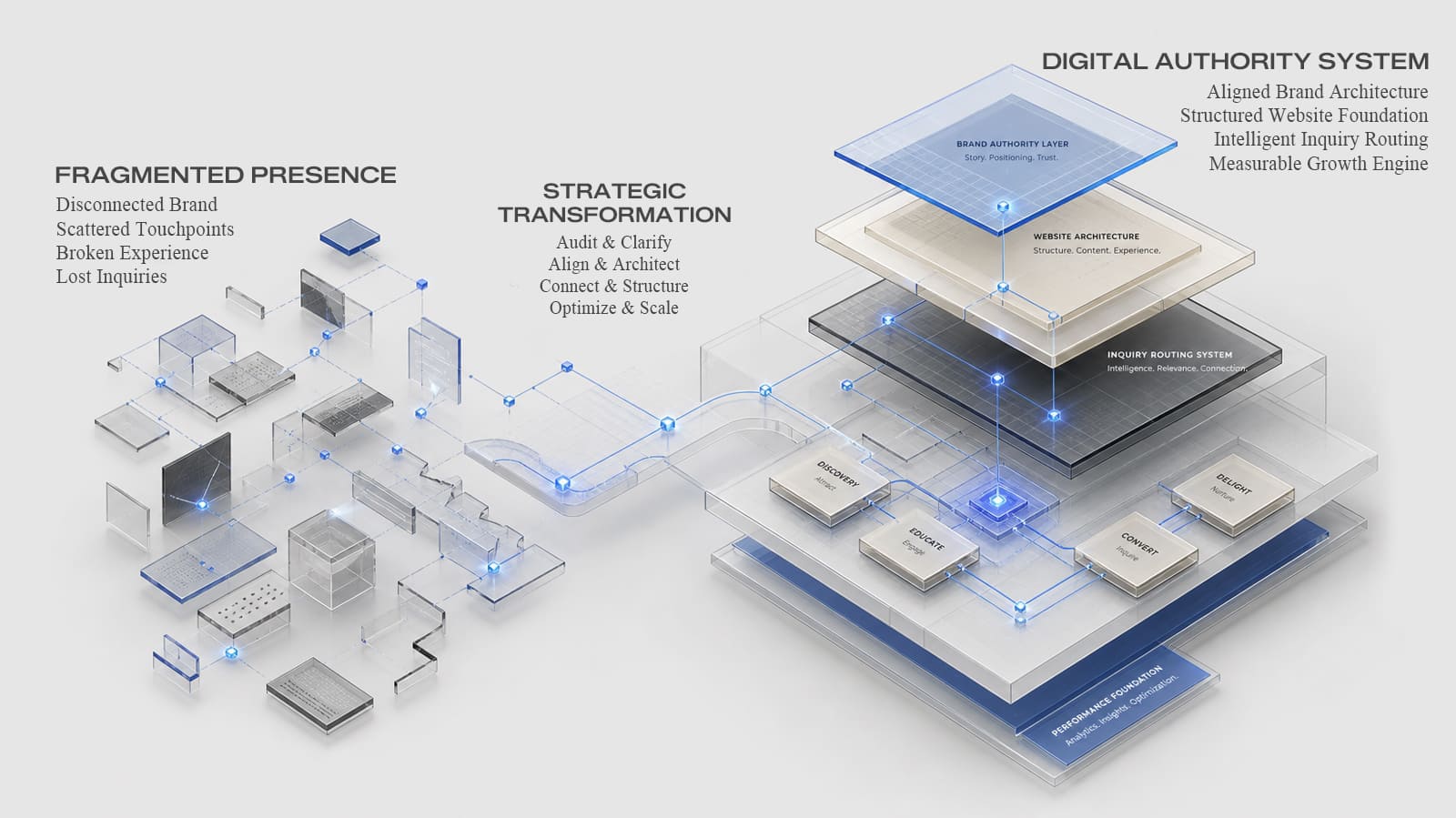
Across sectors, the pattern is often the same: capable organizations are limited not by lack of effort, but by lack of structural coherence. These digital architecture case studies show how aligned brand systems, website architecture, and inquiry logic can create stronger authority and more effective digital presence.
Start the Conversation
If your digital presence feels fragmented, overbuilt, or no longer aligned with the level of business you are operating, we can begin with a focused strategic consultation.